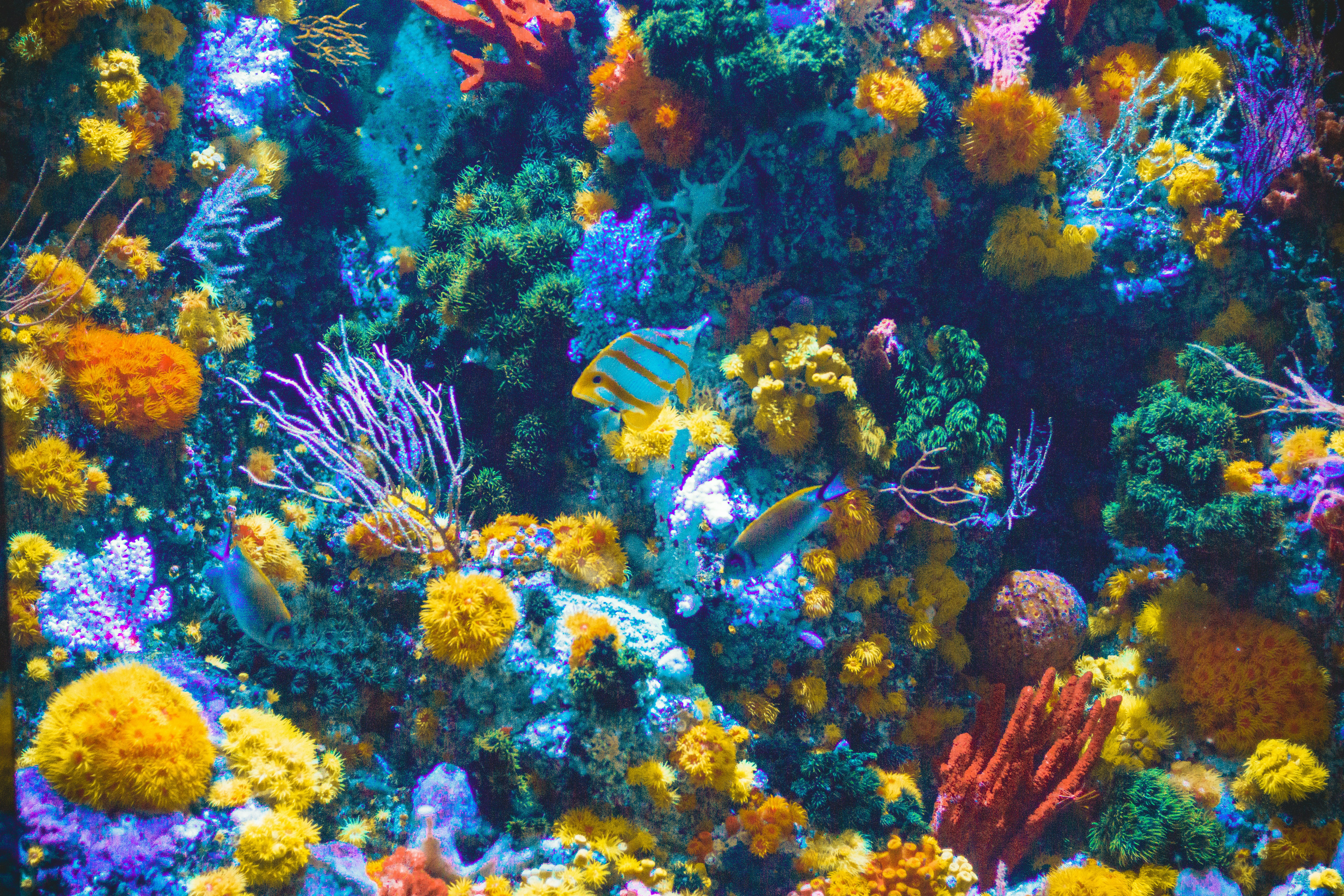
We know how good it feels to get a hug from our loved ones. Science has shown that physical touch is vital for human health. For infants, a lack of regular physical contact, cuddling, and responsive care disrupts core physiological, hormonal, and neurological development. It turns out that on coral reefs, a healing touch can restore health, too.
When ocean temperatures spike, coral reefs across the globe experience sudden trauma and expel the microscopic, colorful algae living inside their tissues that supply up to 90% of the coral’s daily food through photosynthesis. Without them, the coral bleaches, starves, and often dies within weeks.
We’ve long believed bleached corals are a lost cause. A recent accidental laboratory discovery shattered that assumption. It turns out that healthy corals can resuscitate their bleached family members.
An Accidental Tumble in a Stanford Lab
The breakthrough began not with complex computer models, but with a physical accident in a laboratory at Stanford University.
Marine ecologist Steve Palumbi noticed that two small finger-coral fragments in an aquarium tank in his Stanford University lab had toppled over and landed against each other. One fragment was healthy; the family member of that coral was bleached.
Where they pressed together, Palumbi spotted something startling: a thin band of vibrant color was creeping across the bleached coral’s pale tissue. The healthy coral was quite literally giving their coral relative life.
Researcher Daniel Collins set up a simple experiment to test what happened:
- He took pairs of genetically identical coral clones—one bleached, one healthy.
- In five tanks, he placed the pairs directly in physical contact.
- In five matching control tanks, he set the pairs apart without touching.
The results arrived with stunning clarity.
Every coral pair placed in physical contact thrived within days. The healthy partner acted as a living bridge, funneling microscopic algae directly into their starving relative. Within seven weeks, all five touching corals regained full color, rebuilt their algal populations, and made a complete recovery.
In the control tanks, every isolated coral died. Proximity alone did nothing. Physical contact between relatives made all the difference.
Nature’s Living Pipeline
Corals might look like colorful ocean rocks, but they are colonies of tiny soft animals building shared homes. When two fragments share the same DNA, their immune systems recognize family rather than an invading enemy. The healthy coral pumps life-giving tenants to their relative, giving emergency care.
This simple mechanism challenges how we think about ecological recovery. We often picture resilience as an individual trait—a single tough organism weathering a storm alone. Here, survival depends entirely on direct, physical connection. Communing is a matter of life and death.
Practical Hope for Global Reef Restoration
Ocean warming caused by climate change remains the single greatest threat to marine ecosystems. This discovery of coral touch gives restoration teams a powerful, low-cost tool.
- Reimagining Coral Nurseries: Reef restoration groups often grow coral fragments on underwater ropes or metal frames with wide gaps between them to prevent competition. Grouping genetic twins together so they can touch could create built-in mutual support systems when temperatures rise.
- Rapid Response Triage: Rather than waiting months for bleached wild reefs to slowly absorb free algae from murky waters, divers could actively graft healthy nursery clones onto bleached colonies immediately after heatwaves pass, jumpstarting recovery by months.
- Accessible Conservation: This technique requires no expensive machinery, chemical injections, or proprietary technology. It relies solely on understanding natural behavior and arranging related living organisms with intention.
The Togetherhood Takeaway
Nature repeatedly solves existential crises through cooperation rather than isolation.
- Look for Simple Physical Bridges: The most durable resilience solutions often look less like high-tech interventions and more like thoughtful, natural arrangements.
- Prioritize Direct Connection: Whether designing community shade canopies, restoring salt marsh shorelines, or nurturing neighborhood ecosystems, survival increases when individual pieces link into a shared network to help one another.
- Stay Open to Accidental Clues: Breakthroughs often hide in plain sight when experiments do not go according to plan. Keen observation of living systems reveals pathways that theory sometimes overlooks or simply never considered.
When healthy living beings reach out and link arms with those in need, recovery begins and restoration can happen at speeds once thought impossible. It’s true for related corals, and it’s true for us, too.